
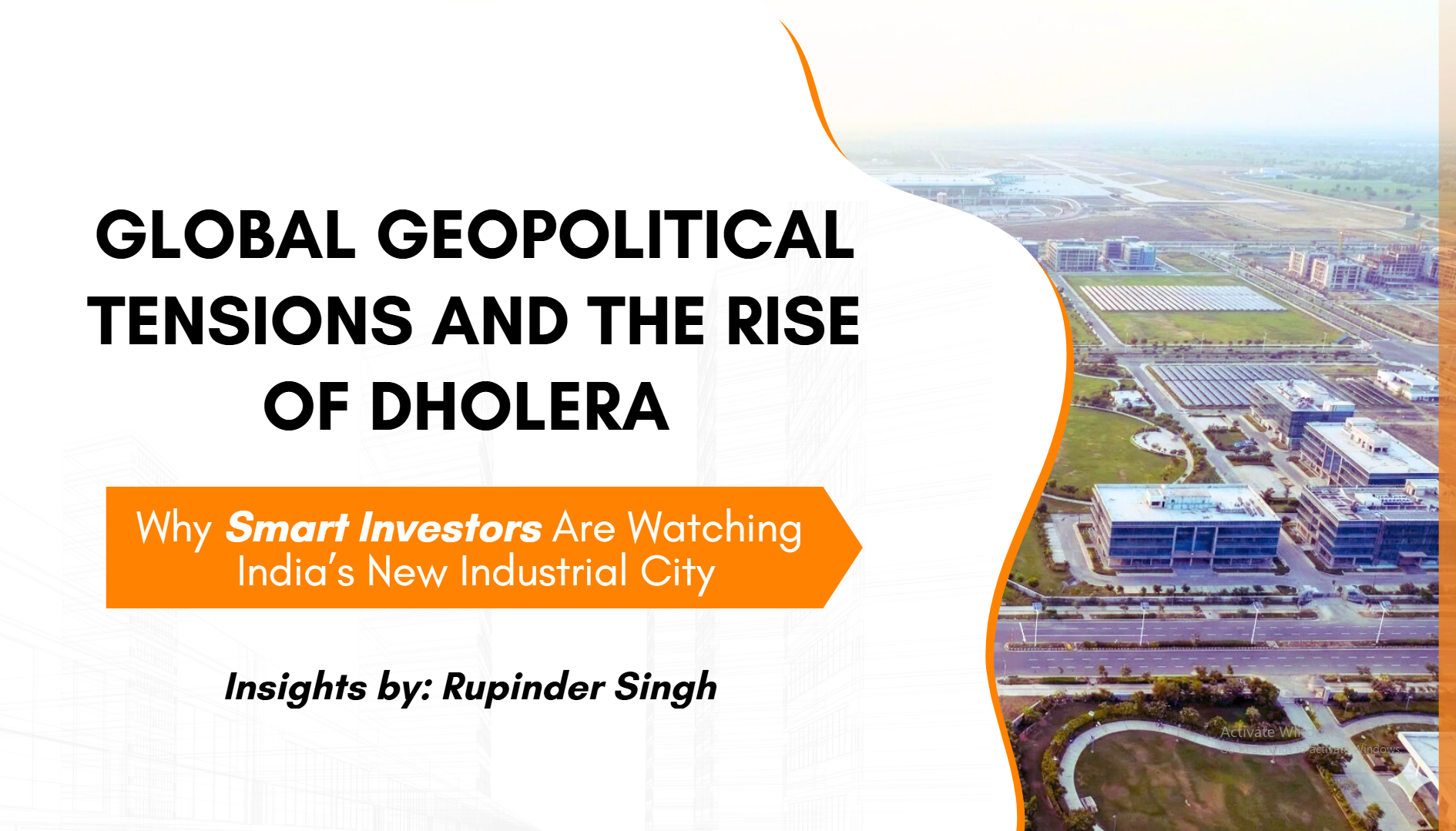
In times of global uncertainty, investment patterns often shift in unexpected ways. While geopolitical conflicts and wars tend to create volatility in financial markets, they can simultaneously open new opportunities in stable and emerging economies.
India has historically benefited from such global shifts, and today, large-scale infrastructure projects like Dholera Special Investment Region are increasingly attracting attention from investors who are seeking long-term growth, security, and strategic positioning in Asia’s evolving economic landscape.
As global tensions reshape trade routes, manufacturing ecosystems, and supply chains, cities designed for next-generation industries are gaining unprecedented importance.
Global Uncertainty Often Redirects Capital to Stable Economies
During periods of geopolitical instability, international investors often move their capital toward countries that offer economic stability, political resilience, and long-term growth potential.
India is widely viewed as one of the most reliable destinations in this context.
With strong economic fundamentals, a rapidly expanding infrastructure network, and a young workforce, India continues to attract foreign direct investment across multiple sectors.
When global uncertainty rises, two things often happen:
• Foreign investment flows into stable economies
• Governments accelerate infrastructure spending to strengthen domestic industries
Both of these factors directly influence the real estate sector, particularly in emerging industrial cities.
Supply Chain Realignment Is Reshaping Global Manufacturing
One of the most significant economic outcomes of global geopolitical tensions is the restructuring of supply chains.
Over the last decade, multinational companies have increasingly sought to reduce their dependence on single-country manufacturing models. As a result, global corporations are actively diversifying their production bases beyond traditional manufacturing hubs.
This shift has created major opportunities for countries like India.
New industrial corridors, logistics hubs, and manufacturing clusters are rapidly emerging to accommodate this global transition.
In India, the government has already taken strategic steps to strengthen industrial infrastructure through initiatives such as industrial corridors, semiconductor manufacturing incentives, and defense production expansion.
Why Industrial Cities Like Dholera Are Becoming Strategic Investment Destinations
Purpose-built industrial cities are uniquely positioned to benefit from these global economic transformations.
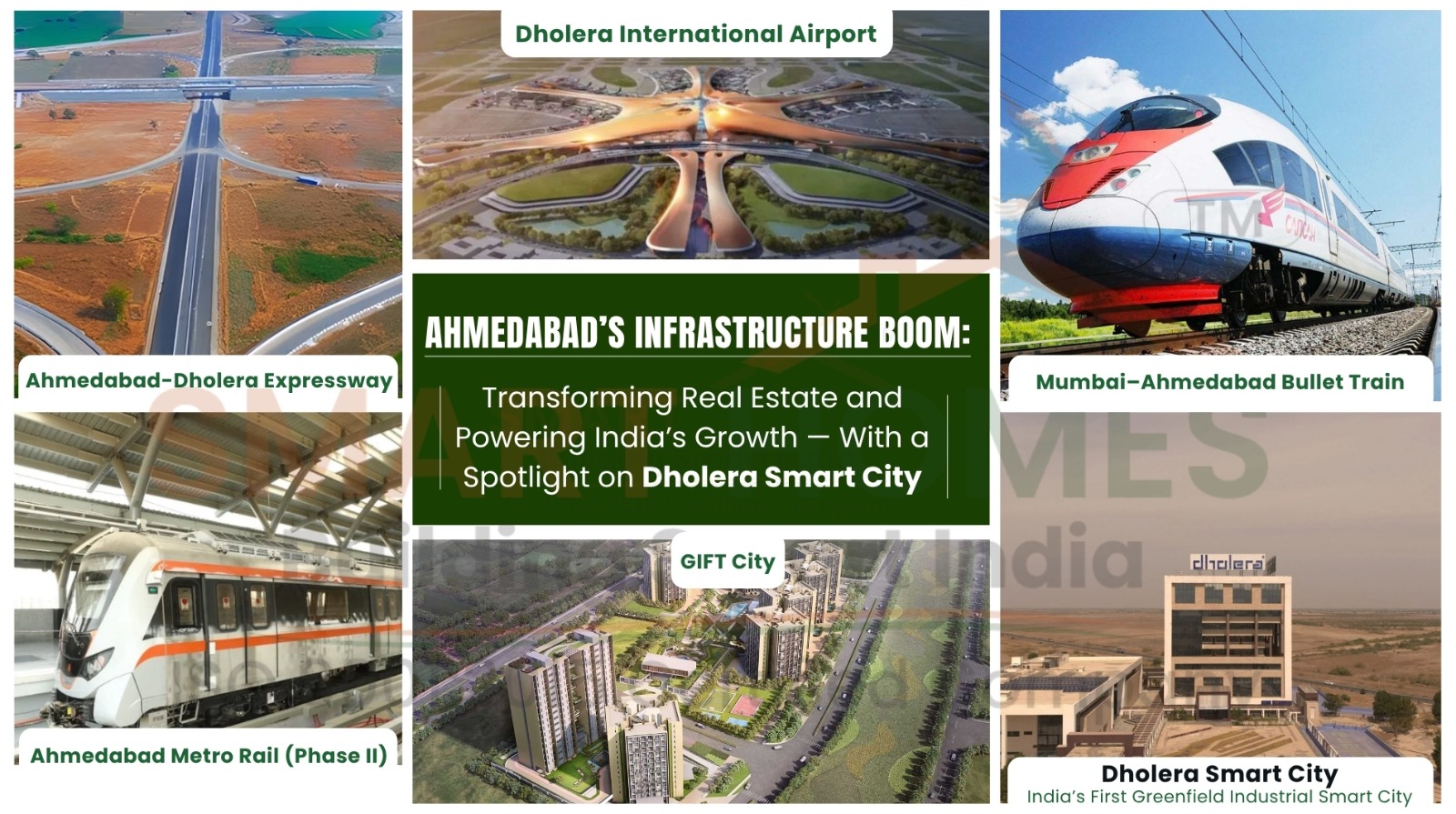
Among them, Dholera Special Investment Region stands out as one of India’s most ambitious infrastructure projects.
Planned as India’s first greenfield smart city, Dholera is designed to support advanced manufacturing, logistics networks, technology industries, and global supply chain operations.
Several factors make Dholera particularly relevant in the current geopolitical and economic environment:
• Large-scale industrial land availability
• Strategic connectivity to ports and major highways
• Integration with national industrial corridors
• Government-backed infrastructure development
These characteristics position Dholera as a potential manufacturing and industrial hub capable of attracting both domestic and global companies.
Semiconductor and Advanced Manufacturing Ecosystem
India’s push toward semiconductor manufacturing and advanced technology production is another major catalyst for industrial growth.
With global semiconductor demand rising and supply chains undergoing restructuring, India has launched aggressive policies to encourage chip manufacturing and electronics production.
Dholera has already emerged as one of the locations being developed to support this ecosystem.
Large technology investments and government incentives are expected to accelerate industrial development in the region over the coming years.
As manufacturing activity expands, the demand for industrial land, warehousing infrastructure, and logistics facilities is likely to increase significantly.
Industrial Growth Often Drives Residential Real Estate Demand
Industrial expansion does not remain limited to factories and production zones.
When manufacturing hubs grow, they bring with them employment opportunities, workforce migration, and supporting service industries.
This creates a natural demand cycle that influences residential and commercial real estate.
Cities that host large industrial ecosystems often experience growth in:
• Residential housing demand
• Rental housing for employees
• Retail and commercial developments
• Hospitality and service sectors
Given its proximity to Ahmedabad, Dholera has the potential to benefit from both industrial expansion and urban spillover from one of Gujarat’s largest economic centers.
Long-Term Investors Are Watching the Infrastructure Story
Real estate markets typically respond strongly to infrastructure-led growth.
Major infrastructure investments such as highways, airports, industrial corridors, and logistics networks tend to create long-term economic momentum.
In the case of Dholera, infrastructure development has been strategically planned to support a fully integrated smart city ecosystem.
For long-term investors, such infrastructure-driven growth environments often represent early-stage opportunities.
A Strategic Perspective for Future Investors
While global conflicts create uncertainty in many markets, they also accelerate economic transformations that redefine investment destinations.
As supply chains evolve, industries expand, and governments strengthen domestic production capabilities, cities designed for next-generation infrastructure stand to gain the most.
Projects like Dholera Special Investment Region represent this new category of planned industrial ecosystems where infrastructure, policy support, and global economic shifts intersect.
For investors observing long-term trends rather than short-term volatility, the coming decade may see emerging industrial cities become some of the most significant growth stories in India’s real estate landscape.